-
Schedule
View Full Schedule
No shows are coming up today. Check the weekly schedule.
- Shows & Broadcasters
-
Community
Register Now!
Don’t have an account? Register now and comment on your favourite show or even become a broadcaster!
No shows are coming up today. Check the weekly schedule.
Don’t have an account? Register now and comment on your favourite show or even become a broadcaster!

An hour of "non-threatening" Classical music with information about the music,composers and performers (some of it true), plus weather and road reports and Public Service Announcements. For fans of piano music, Wednesdays are "Piano Wednesdays" on Snooze Button. Hear some of the world’s best pianists (a large number of whom are Canadian, and some of whom have performed in Lillooet) with occasional contributions from the harpsichord and organ.
Here is Snooze Button’s tribute to Canadian broadcaster Clyde Gilmour. Gilmour was the host of “Gilmour’s Albums” from 1956-1997 (the year he died) on CBC Radio. As a kid growing up in Lillooet, we only had about 12 or so LPs of classical music, so “Gilmour’s Albums” played an important role in my musical education during my teen years.
This episode of Snooze Button starts with Gilmour’s opening theme music - “Akinla” from the African Suite by Fela Sowande. On then to Brazilian soprano Bidu Sayao’s rendition of the Aria from Bachianas Brasileiras No. 5 by Heitor Villa-Lobos. Next up is Canadian contralto Maureen Forrester singing three Metis Folksongs set by Malcolm Forsyth. Then we have American violinist Michael Rabin with Saint-Saens’ Introduction and Rondo Capriccioso. The episode ends with Gilmour’s closing theme music - Faure’s Pavane arranged for (wordless) soprano, flute and guitar. All of this music and the performers were featured on “Gilmour’s Albums”. You even get a few words from Gilmour himself on this episode.
On next Friday’s show (April 16, 2021) I will pay tribute to beloved CBC broadcaster Clyde Gilmour. No particular reason, it was just an idea I had. Those of a certain age will recall his weekend program “Gilmour’s Albums” with great fondness. And yes, the show will feature both the opening and closing theme music from his show, although you’ll get to hear it in its full form as opposed to edited down for theme music use.
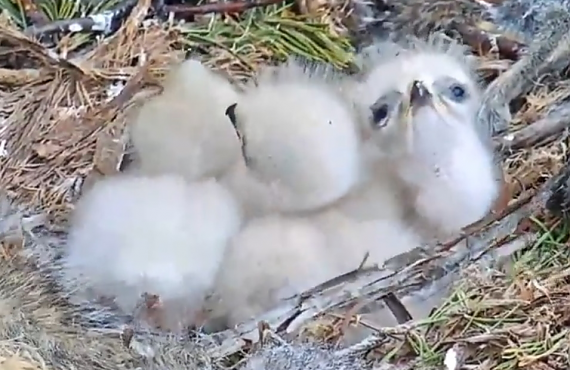

Here is a series of photos I’ve been meaning to post for a while. I don’t consider myself a photographer - I’m just a guy who takes pictures. If the photos are good it’s only because the “subjects” are great and I happened to be looking at the right time. None of these photos have been edited in any way.
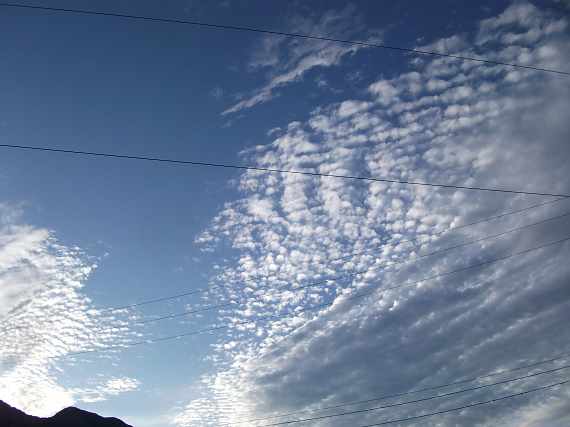
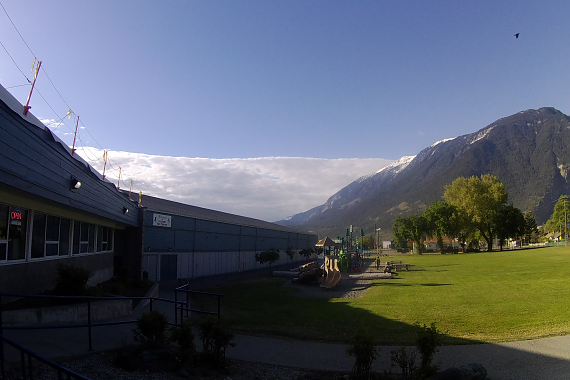
These pictures will be of interest primarily to weather nerds (like myself). I don’t have enough meteorological knowledge to say exactly what was happening, but on the morning of May 10, there was a clearly marked distinction between clouds and clear sky. Over the space of a couple of hours the “battle front” shifted north, south, then north and south once again before finally settling down to a mostly clear day.
When I arrived at the REC Centre yesterday morning to prepare for “Snooze Button” I was surprised to see a group of youngsters exercising on the lawn. As they were mostly dressed in black I assumed that they were Ninjas-in-training. They must have been a pretty advanced class - their young years notwithstanding - as a few minutes later they had completely disappeared. I figure that only advanced students would have this ability. I should have taken another picture to prove that they were invisible but it didn’t occur to me at the time.
Well, this didn’t turn out nearly as good as it looked on my camera’s viewing screen, but I wasn’t surprised by that. Sorry it’s kind of shaky - hand-held. This configuration was hanging attractively in the southern sky yesterday morning at 7 AM. Jupiter is barely visible, but it’s there - just right of Venus near the center of the picture. I was hoping for another clear morning today (Jan. 30) to see how the configuration had changed with the moon’s later rise but now it will remain a mystery.
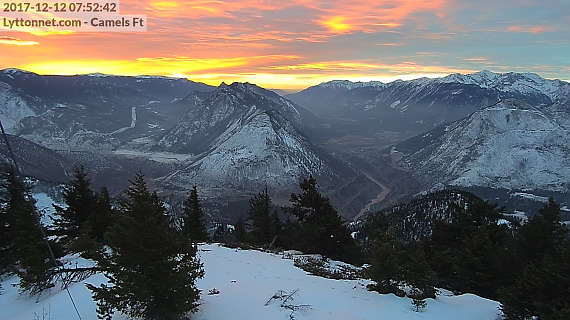
I posted this photo just to prove that there really is a beautiful morning somewhere above the fog! The camera is facing south with the north end of Fountain Ridge in the centre, Lillooet a little right of center and Fountain Valley left of center. This image is courtesy of the Lyttonnet webcams:


This piece by Argentine composer Astor Piazzolla has become one of his most beloved and most frequently performed pieces. The “milonga” was a predecessor of the tango and while tangos developed in more urban areas, the milonga was more rural in origin. Milongas also were usually slower and sadder than tangos. The “Milonga del Angel” is filled with a feeling of aching sadness, at timed tinged with a hint of danger.
(Please go to the link below to see a picture of this bird). On November 5, 2014 Lillooet ornithologist Ken Wright observed a Northern Mockingbird in the area of Fountain Flats. On November 12, 2014 Jeff O’Kelly’s attention was caught by a bird calling from a tree outside his front door. After observation and consulting with Ken, Jeff identified it as a Northern Mockingbird. On Dec. 22, 2014 Dr. Ian Routley obtained a photograph of the bird in town. This is quite an unusual occurrence - this species is well out of range.
The 7 photos posted below are pictures taken by Lillooet naturalist Ken Wright during a recent trip to Madagascar. Scroll on down below the photos to find my interview with Ken.
It’s International Restorative Justice Week. On the November 18 edition of Snooze Button I was joined in the studio by Toby Mueller, Emerson Adolph and Trevor Chandler - all of whom are involved with restorative justice programs in Lillooet. Posted just above this notice is the show we did and some links mentioned during the show. At the Lillooet Restorative Justice website you will find links to a variety of resources and information on the subject of Restorative Justice.
Symphony #49 by Christian Cannabich (a contemporary of Haydn); Gershwin’s Cuban Overture in an amazing arrangement for piano duet with percussion, played by Canadian brothers Jackie and Jamie Parker; Maurice Ravel’s “Le Tombeau de Couperin” (orchestral version) and the Toccata from the piano version of the same piece.
Piano Wednesday: Bach’s French Suite #2 played by Glenn Gould; a Barcarolle by Gabriel Faure; Mozart’s comedic variations on a theme by Gluck; Andrei Schulz-Evler’s virtuosic “Arabesques on themes from The Beautiful Blue Danube” - one of the great piano showpieces.
On today’s show: two of Mozart’s “church sonatas”; Dag Wiren’s thoroughly engaging Serenade for Strings; the last 2 movements of Joachim Raff’s Symphony #9 “To Summer”; Percy Grainger’s strange but effective scoring of a piano piece by Debussy.
Walter Gieseking plays 2 pieces by Mozart, a movement from Anton Reicha’s quintet for clarinet and strings, Ottorino Respighi’s big, noisy, colourful (and a little bit trashy) Roman Festivals. Encore: the highly evocative “Midsummer Moon” by Rebecca Clarke.
All Scandinavian music today. Two pieces for flute and piano by Joachim Andersen; Dag Wiren’s charming March from his String Serenade; Sibelius’ incidental music for the play King Christian II; Grieg celebrates his wedding anniversary with “Wedding Day at Troldhaugen”.
Today - 2 movements from a Mozart Divertimento for woodwinds; the overture to Offenbach’s “Orpheus in the Underworld”; the concluding two movements of Beethoven’s “Kreutzer” Sonata - Violin Sonata #9 (the 1st movement can be heard on Snooze Button #1548).
Today’s show: 2 movements from Eric Coates’ “London Suite”; Jascha Heifetz and Benno Moiseiwitsch play the 1st movement of Beethoven’s Violin Sonata #9; Ravel’s Rhapsodie Espagnole; Jascha Heifetz returns for an encore - Glazunov’s “Meditation”.
Piano Wednesday! All French music on today’s show. Three pieces by the vastly under-rated Emmanuel Chabrier; a harpsichord piece arranged by Jean-Baptiste Forqueray from one of his father’s pieces; Debussy’s early and rarely heard Fantaisie for piano and orchestra.
Piano Wednesday! Bach’s French Suite #6, Gyorgy Cziffra plays his own knock-down drag-out paraphrase on “The Blue Danube”, Mozart’s Piano Concerto #1 (or #5 depending on how you look at it). Grieg’s fresh, cheery “Bridal Procession” is served as dessert.
Today, 3 short guitar pieces by Agustin Barrios, Pablo de Sarasate’s brilliant violin showpiece “Zigeunerweisen”, the Scherzo from Mahler’s 5th symphony - almost a concerto for french horn. For an encore Dame Moura Lympany plays Liszt’s glittering “Fountains of the Villa D’Este”.
Today’s show: Vivaldi’s one and only concerto for 2 cellos; Emile Waldteufel’s “Shower of Diamonds” waltz; Khachaturian’s Masquerade Suite; for an encore, Stanislas Niedzielski’s virtuoso arrangement of Johann Strauss Jr.’s “1001 Nights” waltz (recorded in 1930).
Piano Wednesday: 3 of Domenico Scarlatti’s short sonatas played by the occasionally frustrating but never boring Ivo Pogorelich; Ravel’s beloved “Pavane for a Dead Princess”; Beethoven’s late A Major Sonata; for an encore, Arcadi Volodos plays his own fiendish arrangement of Mozart’s “Rondo alla Turca”.
Today’s show: two movements from Haydn’s Piano Trio #25 including the lively Gypsy finale; Schubert’s song “On The River” for tenor, french horn and piano; 3 short tone-poems by Max Reger, inspired by the works of Swiss painter Arnold Bocklin; Johann Strauss Jr.’s “Im Krapfenwald’l” polka.
Two highly-contrasted orchestral pieces by Debussy to begin; Cecile Chaminade’s Concertino for flute and piano; Mieczyslaw Karlowicz’ Serenade for string orchestra (and my attempts to say his name correctly); for an encore violinist Ivry Gitlis plays Saint-Saens Etude en forme de Valse.
[Yesterday’s show was technically disastrous and will not be posted.]
Two movements from Hadyn’s Symphony #20; Sir Arnold Bax’s Symphonic Scherzo; a complete recording of Saint-Saens 4th Piano Concerto. Concluding this week’s encore theme (Schmalz) some Russian Schmalz with baritone Dmitri Hvorostovsky. A Happy Easter Weekend to everyone. Snooze Button will be back on Tuesday, Apr. 22.
A rather chaotic show today with interruptions and technical challenges. Handel’s Harp Concerto, the sole surviving movement from a symphony Debussy wrote at the age of 18, Shostakovich’s Ballet Suite #2. This weeks encore theme is “Schmalz” - introduced by Fritz Kreisler’s “Liebesleid” (Love’s Sorrow).
Sonata #2 in G Major by 18th century Welsh harpist John Parry to start; next up are the Nocturne and Tarantella for violin and piano - music that hovers between the late Romantic and the Impressionist periods; Mozart’s Symphony #30; to conclude this week’s “opera without singing” encore theme, Pierrot’s Dance-song from Korngold’s opera “The Dead City”.
Since I couldn’t do a broadcast on Apr 9, today you are getting “Piano Wednesday” on a Thursday. The show starts with a Bach Prelude and Fugue (the latter of which is even more of a brain-twister than usual); next up is Chopin’s Polonaise-Fantaisie; the show continues with Jorge Bolet’s overwhelming performance of Liszt’s arrangement of the overture from Wagner’s “Tannhauser”; to conclude a favourite - even of people who hate Wagner: The Ride of the Valkyries in a virtuoso arrangement for piano. Guaranteed no singing!
Today’s show features music that sounds like the composers were in a good mood when they wrote it: two movements of a Haydn piano trio; Brahms’ Academic Festival Overture; waltzes from Richard Strauss’ “Der Rosenkavalier”. Continuing this week’s encore theme (“Opera without singing”) - Moritz Moszkowski’s brilliant arrangement of the “Danse Boheme” from Bizet’s “Carmen”.
A cheery concerto by Vivaldi for 2 guitars (originally 2 mandolins) starts today’s show; next is the Scherzo from Schubert’s late, great String Quintet; Ravel’s hommage to Schubert - the “Valses Nobles et Sentimentales” is the main course. This week’s water-themed encores continue with Schubert’s song “To Be Sung On The Water”, first in its original version for voice and piano, then in Liszt’s transcription for solo piano.
Piano Wednesday! Today’s show begins with a pair of Liszt’s “Transcendental Etudes”. Next up is William Hirtz’ “Wizard of Oz” Fantasy based on…do I really need to finish this sentence? The big piece for the hour is an unusually-structured “Sonatina” for keyboard and orchestra by C. P. E. Bach. This week’s water-themed encores continue with Liszt’s virtuosic arrangement of Schubert’s popular song “The Trout”.
April Fool’s edition: 3 Greek Dances by Nikos Skalkottas to start; Chopin’s popular “Scherzo” in B-flat minor played by Canadian pianist Jon Kimura Parker; Mozart’s “Musical Joke”; the water theme for this week’s encores continues with Robert Hampton’s “Cataract Rag” and “Rialto Ripples” by Gershwin and Will Donaldson.
Today: a pair of Paganini’s caprices played on the flute; the 2nd movement of Joachim Raff’s Violin Sonata #2; the 1st movement of Tchaikovsky’s gloomy 4th Symphony; as an encore - Debussy’s “Reflections in the Water”. (This week’s encores will feature music about water.)
Today’s show begins with some modestly-scaled (probably intended for children) but charming piano pieces by Czech composer Bohuslav Martinu; next is Schubert’s stand-alone Rondo in A for violin and orchestra;the big piece on today’s show is an aggressively “period” but rollicking good fun recording of Bach’s 1st Brandenburg Concerto; this week’s encores featuring Enrico Caruso wrap up with a powerful duet from Verdi’s late masterpiece “Otello”.
Next week’s encores: music about or featuring water.
Today, Heinrich Ignaz Franz von Biber’s “Representative Sonata”, complete with its imitations of the Nightingale, Cuckoo, Frog and others; the first movement of Beethoven’s Opus 1 #1; a tone poem by the now forgotten Ernest Boehe based on incidents from Homer’s Odyssey; to conclude, Enrico Caruso singing two songs - one in the Neapolitan dialect, the other in English.
Piano Wednesday! Today, a pair of Preludes and Fugues from Bach’s Well-Tempered Clavier; Liszt’s flashy Polonaise #2; Rachmaninoff’s 2-piano suite #2 played by a renowned Russian piano duo; an odd but attractive waltz from Liszt’s latter years.
Today a symphony by Mozart’s almost exact contemporary Joseph Martin Kraus; the “Rondeau de Concert avec introduction by 19th century guitarist and composer Napoleon Coste; the first movement of Ernest Chausson’s extravagantly romantic “Concert” for solo violin, piano and string quartet; more Caruso encores to finish - today comparing 2 different transfer processes in the same recording of the same aria.

Two of Joseph Canteloube’s beautiful “Songs of the Auvergne” to start; one of Jeno Hubay’s stirring and evocative “Gypsy Scenes” for violin and piano; a flute concerto by C.P.E. Bach; encores by Enrico Caruso (who will be featured all this week in the encores section of the show).
Today: 2 of Georg Philipp Telemann’s Fantasias for solo violin; a movement from Albeniz’ “Suite Iberia” very effectively arranged for 3 guitars; 2 movements from Joachim Raff’s Symphony #8 (“Spring Sounds”); a pair of encores by jazz great Art Tatum.
Today’s show opens with the Canadian Brass playing selections from Handel’s “Music For The Royal Fireworks”. Niccolo Paganini takes over the rest of the show with Eliot Fisk playing 3 of his own arrangements on the guitar of Paganini’s Caprices (originally for solo violin). Then American pianist Earl Wild takes us on a “dangerous” ride through Rachmaninoff’s “Rhapsody on a Theme of Paganini”.

On Today’s Show: Excerpts from Camille Saint-Saens’ autumnal oboe sonata and a harpsichord concerto by C. P. E. Bach. Also Wagner’s Siegfried Idyll (written as a birthday present for his wife) and, for those who hate Wagner, a little Gershwin encore to take the bad taste out of your mouth.
Beginning on Sunday, January 19, 2014 you’ll be able to hear more classical music on CHLS with the premiere of “Classical Corner” - 3 hours of classical music (presented without Jeff’s long, rambling introductions) on Sunday mornings from 6-9 AM.
Piano Wednesday! Today’s edition of Snooze Button is the “Cold War” edition with music mostly by Russian and American composers. To start Robert Schumann’s Traumerei - one of the most beloved of all piano miniatures. The show continues with two more “salon” pieces by Anton Rubinstein and Louis Moreau Gottschalk. Then fasten your seat belt for an amazing performance of Gershwin’s “Cuban Overture”. To conclude, Mikhael Pletnev’s colourful and virtuosic arrangement of music from “The Nucracker” played by young Maceonian pianist Simon Trpceski.
Two movements from Georg Philipp Telemann’s concerto in G Major for the rich-toned oboe d’amore. An overture to Joseph Martin Kraus’ (a contemporary of Mozart) massive opera “Aeneas in Carthage”. Some selections from Prokofiev’s Cinderella Suite #1. To conclude - a little Duke Ellington.
Coming up on this Wednesday’s edition (Dec. 18) of Snooze Button - a stunning recording of Gershwin’s “Cuban Overture” featuring Canadian pianists and brothers Jon Kimura (Jackie) and Jamie Parker. Don’t miss this!
Some brilliant arrangements for brass ensemble of music from the Baroque and Renaissance periods to start. Also the first movement of Debussy’s impressionistic masterpiece “La Mer” and Beethoven’s brilliant and virtuosic violin sonata #3, with a couple of seasonal encores from Tchaikovsky’s Nutcracker ballet.
On today’s show Jeff complies with a special request. Also, a cheery concerto for 2 flutes by Vivaldi, two movements from Dvorak’s “Dumky” trio played by Canada’s superb Gryphon Trio, and a couple of all-time favourites by Johann Strauss II to finish the show.
Happy Valentine’s Day everyone! (Which I completely forgot when putting together this show.) On today’s show, two orchestral pieces by Debussy; Napoleon Coste’s Introduction & Rondo for guitar (a prototype for the “Can-Can”); four movements from Mozart’s “Gran Partita” for 12 woodwinds & double bass.
An oboe concerto by baroque composer Alessandro Marcello; the scherzo from Beethoven’s magnificent “Archduke” Trio; the finale from Tchaikovsky’s “Manfred Symphony” (based on a verse drama by Lord Byron); for an encore, the great German tenor Franz Volker sings an aria from Ralph Benatzky’s operetta “The Three Musketeers”.
On today’s show: 2 of Mozart’s cheery “Church Sonatas” for organ and small instrumental ensemble; Pablo de Sarasate’s fantasy on themes from the opera “Martha” (by Friedrich von Flotow); Nachtmusik (night music) II from Mahler’s 7th Symphony; to conclude, Debussy’s strange and attractive March Ecossaise.
On today’s show: to begin, a sonata by Welsh harpist and composer John Parry; the first movement of a string quartet by the teen-aged Franz Schubert; the 2nd and 3rd movements of Jan Sibelius’ 3rd symphony; one of Nikolai Kapustin’s jazzy preludes to finish.
To begin, a concerto for 2 guitars by Vivaldi. The lovely Nocturne from Alexander Borodin’s 2nd string quartet. The second movement of Saint-Saens’ big, fun and noisy Symphony #3. Astor Piazzolla’s haunting “Midnight in Buenos Aires” to conclude.
On today’s show, a fantasia for solo violin by Georg Philipp Telemann (a contemporary of Bach), a rousing overture by Verdi, a “pocket concerto” featuring the brilliant piano-writing of Henri Herz and, turning in a completely different direction, Clarence “Pinetop” Smith’s “Pinetop Boogie Woogie” to end the show.
Snooze Button podcasts are back on-line! Today, 2 Greek Dances by Nikos Skalkottas, Ravel’s “Introduction & Allegro” for this, that and the other thing (listen to the show and I’ll explain), a symphony by the teen-aged Mozart and the glorious voice of tenor Fritz Wunderlich in an aria by Franz Lehar from his operetta “The Land of Smiles”.
Piano Wednesday!
Music by Sibelius, Beethoven, Liszt and Rameau. A knockout performance of Liszt’s Hungarian Fantasia by Georges Cziffra.
Today’s Restorative Justice Music: 2nd movement of Beethoven Piano Concerto #3 played by Glenn Gould. Hear Beethoven stop time!
My apologies dear listeners. Human error made Snooze Button #836 (Sept. 30/2010) a debacle which is unfit for human consumption.
More of the pianism of Monique Haas in music by Schumann. Sibelius’ “Rakastava” for strings, timpani and triangle. Rarely heard ballet music from Verdi’s French opera “Jerusalem”. To finish, a “Burleske” by Max Reger for piano four-hands based on the German folksong “Ach, du lieber Augustin”.
This week, “Snooze Button” recognizes “National Victims of Crime Awareness Week” in Canada (Apr 18 - 24). Today’s show: Glenn Gould starts things off with the 2nd and 3rd movements of Beethoven’s Sonata # 8 in C minor; the 2nd movement of Shostakovich’s 6th Symphony; to conclude the last 3 movements of Ernest Chausson’s “Concert” for solo violin, piano and string quartet.
Vocal music bookends today’s show. Two songs (“An die Musik” and “Seligkeit”) by Schubert to begin; the 2nd movement of Haydn’s Symphony #104; Sergei Lyapunov’s tuneful 1st piano concerto; Fritz Wunderlich sings an aria from Johann Strauss II’s operetta “A Night in Venice” to end the show.
Today’s show moves backward chronologically. Er…I mean the music moves backward - you won’t get an hour younger by listening to the show. Two songs for men’s chorus by Schubert; a symphony by Sammartini; Bach’s Sonata #2 - originally for solo violin but here played on viola; 2 anonymous dances from the Renaissance period. In the context of the Bach selection, I theorize about why the viola “can’t get no respect” and share a few of the hundreds of viola jokes that exist somewhere out there.
Today’s show features a concerto by Baroque composer Johann David Heinichen, the lyrical second movement of Beethoven’s String Quartet Op. 18 #3, Liszt’s 1st Piano Concerto played by Janina Fialkowska, and a couple of “encores” for brass ensemble.
Greetings dear listeners! It’s been a while since I posted a show here on the website but I’m going to try to get back to doing it regularly. Today is a “Piano Wednesday” featuring music that all has a Spanish connection. Music by Scarlatti, Granados and Gottschalk. Pianists featured are Horowitz, Angela Hewitt, Douglas Riva and Cecile Licad. Enjoy.
The theme of today’s show is “Music from places that are warmer than Lillooet is right now”. To begin, 2 pieces from Manuel De Falla’s ballet “El Amor Brujo”; Canadian violinist Scott St. John and guitarist Simon Wynberg play Paganini’s “Variations on Barucaba”; Louis Moreau Gottschalk’s Symphony #2, subtitled “A Montevideo” (written while he was in Uruguay; more Gottschalk to conclude his glittering and infectious “Grande Tarantelle” for piano and orchestra.
Piano Wedneesday! All Liszt! “Hymne du Matin” to begin, illustrating the composer’s religious side; “Valse-Impromptu” - Liszt the charmer; “Patineurs” - a scherzo based on an ice-skating scene from Meyerbeer’s opera “Le Prophete” shows Liszt’s skill and originality as a transcriber; to finish, the lively gypsy rhythms of Hungarian Rhapsody #8. Today’s show is dedicated to the memory of my friend John Parker.
The final two movements from Camille Saint-Saens’ late sonata for clarinet and piano to begin; music by Lars-Erik Larsson written for a production of “A Winter’s Tale”; the Shakespeare connection continues with Erich Wolfgang Korngold’s colourful and frequently humorous suite of music for “Much Ado About Nothing”; Saint-Saens returns to close the program - his “Etude en forme de Valse”.
Two Mozart selections to begin - the slow movement from his G minor Quartet for piano and strings and the finale from Symphony #28; Richard Strauss’ medley of waltzes from his operatic masterpiece “Der Rosenkavalier”; two movements from Nikolai Kapustin’s jazzy 1st piano sonata to conclude.
This week Snooze Button recognizes Restorative Justice Week!
Piano Wednesday! Two of Dmitri Shostakovich’s Preludes and Fugues to begin; Glenn Gould plays the 2nd and 3rd movements of Beethoven’s Piano Concerto #5; Frederic Rzewski’s setting of “Down by the Riverside” played by the amazing Marc-Andre Hamelin.
This week Snooze Button recognizes Restorative Justice Week!
A pair of opera choruses by Verdi to begin, including the much-beloved “Va, pensiero” from “Nabucco”; the Adagio movement from Beethoven’s first published work, a piano trio; Rimsky-Korsakov’s lively “Capriccio Espagnol”; Rimsky-Korsakov’s even MORE lively “Flight of the Bumblebee in a virtuoso piano transcription by Rachmaninoff.
Piano Tuesday! (I took off Nov. 11, so piano day is moved up one day this week.) A Pavane and Galliard by William Byrd to begin; “Claire de lune au large” by little-known French composer Gustave Samazeuilh; Piano Concerto #7 by the equally obscure Henri Herz; two of Ernesto Lecuona’s “Danzas Afro-Cubanas” to wrap things up.
Two movements from a symphony by the very obscure Wenzel Pichl; one of Rossini’s sonatas for strings in an arrangement for woodwind quartet; a rare example of music written by committee - “Hexameron” - variations for piano on a theme by Vincenzo Bellini; the variations are by Liszt, Thalberg, Pixis, Herz, Chopin and Czerny.
Swedish tenor Nicolai Gedda sings arias by Mozart and Lehar; after some technical flubs on my part, Isaac Stern plays Ravel’s “Tzigane”; the final 3 movements of Haydn’s “Drumroll” Symphony (#103) played by Symphony Nova Scotia; three of Shostakovich’s Preludes, op. 34 to conclude.
Two guitar pieces by Mexican composer Manuel Ponce; the 1st movement of Haydn’s Symphony #103 with a spoken introduction by conductor Georg Tintner (the remainder of the symphony will follow on Thursday, Nov. 5 edition of “Snooze Button”); the final 3 movements of Chopin’s late Sonata for Cello and Piano; three pieces by American composer Leroy Anderson including one of his hits - “The Syncopated Clock”.
To begin, an arrangement of the Appalachian spiritual “Wayfaring Stranger” for percussion and piano; the finale of Beethoven’s Violin Sonata #3, recorded by Fritz Kreisler in 1935 with Franz Rupp at the piano; the Overture to Rameau’s opera-ballet “La Naissance d’Osiris”; Sir Arnold Bax’s colourful tone poem “November Woods”; Beethoven’s obsessively cheerful “Rondo a Capriccio” to conclude.
THE Halloween Show. Grieg’s March of the Trolls to start followed by Tomita’s synthesizer version of Debussy’s “The Sunken Cathedral”; the Witches’ Ballet from Verdi’s opera “MacBeth”; Mussorgsky’s “Night on Bald Mountain” with some re-orchestration by Leopold Stokowski; two selections of John Williams’ music for “Harry Potter and the Philosopher’s Stone”.
Two movements from Mauro Giulani’s “Grand Duo Concertant” for flute and guitar (during the introduction of which, your host experiences a linguistic crisis); Halloween celebrations continue with Dvorak’s symphonic tone poem “The Noon Witch”; the late, lamented CBC Vancouver Orchestra play Bach’s Brandenburg Concerto #4; Billy Mayerl and Austin Croom-Johnson play Mayerl’s “Bats in the Belfry” as a piano-harpsichord duet.
Piano Wednesday! Halloween offerings continue with two spooky pieces (Schumann and Liszt) played by Sviatoslav Richter; a hellishly difficult etude by Charles-Valentin Alkan played by Marc-Andre Hamelin; an incandescent recording of Rachmaninoff’s Rhapsody on a Paganini with pianist Earl Wild and conductor Jascha Horenstein; Prokofieff’s “Suggestion Diabolique”.
Two songs by Richard Strauss to begin, sung by French baritone Gerard Souzay; today’s Halloween offering - the concluding sections of Mussorgsky’s Pictures at an Exhibition in Maurice Ravel’s orchestration; the lyrical 2nd movement from Brahms’ Quartet #2 for Piano and Strings; a movement from Leo Weiner’s Hungarian Folk Dance Suite.
Two pieces by Brazilian composer and guitarist Marco Pereira (b. 1956); this week’s Halloween offerings begin with Tartini’s “Devil’s Trill” Sonata; the finale from Schubert’s “Great” Symphony in C Major (variously known as Symphony # 7, 8 and 9!); the Simon Bolivar Youth Orchestra plays “Mambo” from “West Side Story”.
Two charming and skillful examples of “British Light Music” to begin; the 1st movement from Mozart’s Piano Trio in B-flat Major played by Canada’s Gryphon Trio; 3 movements from William Grant Still’s “Afro-American” Symphony (#1); Cecile Chaminade’s “Air de Ballet” to conclude.
Piano Wednesday! Two pieces from Francois Couperin’s “Onzieme Ordre” for harpsichord; Sir Arnold Bax’s evocative “What the Minstrel Told Us”; Glenn Gould plays the 2nd and 3rd movements of Beethoven’s Piano Concerto #4; three of Charles-Valentin Alkan’s “Esquisses”.
“Classical Suite” for harp by Lynne Palmer (b. 1918); two movements of Moritz Moszkowski’s “From Foreign Lands” (originally for piano duet, but heard here in the composer’s orchestration); violin concerto #5 from Pietro Locatelli’s “L’arte del Violino”; Chopin’s “2/4” Waltz in A-flat played by Agustin Anievas.
Two Schubert songs to begin with tenor Philip Langridge and soprano Elly Ameling; the brilliant overture to Carl Maria von Weber’s opera “Euryanthe”; Bach’s Brandenburg Concerto #6 played by the late great CBC Vancouver Orchestra with conductor Mario Bernardi.
Piano Wednesday! Two movements of a neo-baroque suite by Gustav Samazeuilh; the Toccata from Charles-Marie Widor’s organ Symphony #5; Piano Concerto #1 by Ignaz Moscheles; “syncopated music” by British composer Billy Mayerl - “The Ace of Hearts” from his “Four Aces Suite”.
Bonus Piano Friday! All Beethoven! In this pre-Thanksgiving show, I’m giving thanks for Beethoven and the piano. The ever-popular “Fur Elise” to begin (or should that be “Therese”: listen to learn more); one of the op. 33 Bagatelles; Sonata #24 in F# Major - one of Beethoven’s own favourites; the concluding three movements of the “Pastorale” symphony in Franz Liszt’s arrangement for piano solo; to conclude Alfred Brendel plays the “Five Variations on ‘Rule Brittania’”.
Two popular Italian songs arranged for cello and guitar; the first movement of Kurt Atterberg’s unfortunately-nicknamed “Dollar Symphony”; the final two movements of Rachmaninoff’s “Sonata for piano and cello” [sic]; part of a bassoon concerto by Vivaldi to conclude.
Piano Wednesday! Glenn Gould plays 2 pieces by William Byrd; dances from Manuel de Falla’s “The Three-cornered Hat” played by Alicia de Larrocha; Murray Perahia plays Bach’s keyboard concerto in G minor (based on the celebrated A minor violin concerto); Debussy’s “Valse: La plus que lente”.
Two of Vardapet Komitas’ Armenian dances; a tribute to the late, great Spanish pianist Alicia de Larrocha with a sonata by Mozart (K. 332 in F Major) and one movement from Albeniz’ Iberia; the 2nd movement of Edouard Lalo’s “Symphonie Espagnole” played by Isaac Stern.
Two arias (Bizet and Mozart) sung by Canadian tenor Mark Dubois; #5 of the “Bachianas Brasileiras” by Heitor Villa-Lobos; the Adagio movement from Schubert’s great C Major string quintet; Francis Poulenc at his most “cartoonish” in the finale from his sonata for clarinet and piano.
Piano Wednesday! A Nocturne and Barcarolle by Faure to begin; two of the months (August and September) from Tchaikovsky’s mis-named “The Seasons”; the first movement of Friedrich Kiel’s rarely heard Piano Concerto in B-flat Major; 3 of Nikolai Kapustin’s jazzy Concert Etudes to finish.
Some gentle harp music to begin; Jules Massenet’s “Scenes Napolitaines”; the 2nd and 3rd movements of Erich Wolfgang Korngold’s lush Violin Concerto (in an award-winning recording by Canadian James Ehnes with the Vancouver Symphony Orchestra and Bramwell Tovey; the venerable American pianist Earl Wild plays two of his “7 Virtuoso Etudes on songs by Gershwin”.
Two musical responses (Brahms and Henselt) to the thought “If I were a bird…”; the string sextet from Richard Strauss’ late opera “Capriccio”; 3 movements of Carl Maria von Weber’s Clarinet Quintet; the great American soprano Eileen Farrell sings “Somebody Loves Me”.